Reviewed 27 October 2026
We may earn a commission from eligible bookings made through our links, at no extra cost to you. We explain practical trade-offs so you can choose a trip that fits. Prices, availability and cancellation terms are set by the provider.
Start with this comparison
These are practical tendencies, not guarantees about a particular vessel. The advertised boat, passenger load, route and conditions determine the actual experience.
| Format | Why choose it | What deserves attention |
|---|---|---|
| Speedboat | A varied circuit linking several stops | Seating, shade, motion and health restrictions |
| Big excursion boat | Scenery, meals and time aboard between canoe outings | Stairs and transfers to canoes or landing craft |
| Traditional longtail | An open view close to the water and flexible private options | Engine noise, spray, seating and pier access |
| Social cruise vessel | Dining, lounging and an onboard atmosphere | Music, shared seating and chargeable extras |
| Canoe or kayak | Close exploration of caves, lagoons and mangroves | Who paddles, passenger arrangement and low passages |
Speedboats: useful for variety, not automatically a short day
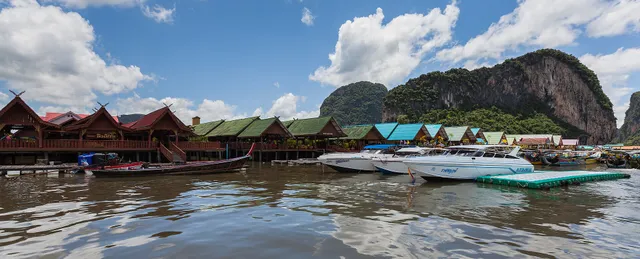
A speedboat can connect dispersed stops efficiently, but many tours use that efficiency to add more activities. The Phuket circuit featured here combines bay sights with canoeing, a village meal and island stops. Compare time devoted to your favourite activity rather than assuming the fastest boat returns to your hotel first.
Seat layout matters. Look for photographs of the actual vessel and ask whether all passengers have a normal seat, how much of it is shaded and where bags are stored. Read the specific restrictions before paying. If someone in your group has a condition affected by jolts, communicate that directly; the word premium does not answer a suitability question.
Big boats: a comfortable base can still involve awkward transfers
A larger support boat provides space between outings and can make eating and watching the landscape part of the day. Our big-boat example uses a two-storey vessel and separate canoe activities. Travellers who enjoy unhurried scenery may prefer that rhythm to repeatedly reaching for shoes and bags at another landing.
Nevertheless, ask how guests move between levels and into the smaller craft. A toilet aboard does not establish that it is step-free. A shaded lower deck does not establish that everyone has a reserved seat. For a mixed-mobility group, photographs of the boarding point, stairs and canoe transfer are more informative than an overall boat length.
Longtails: compare a charter with a complete excursion
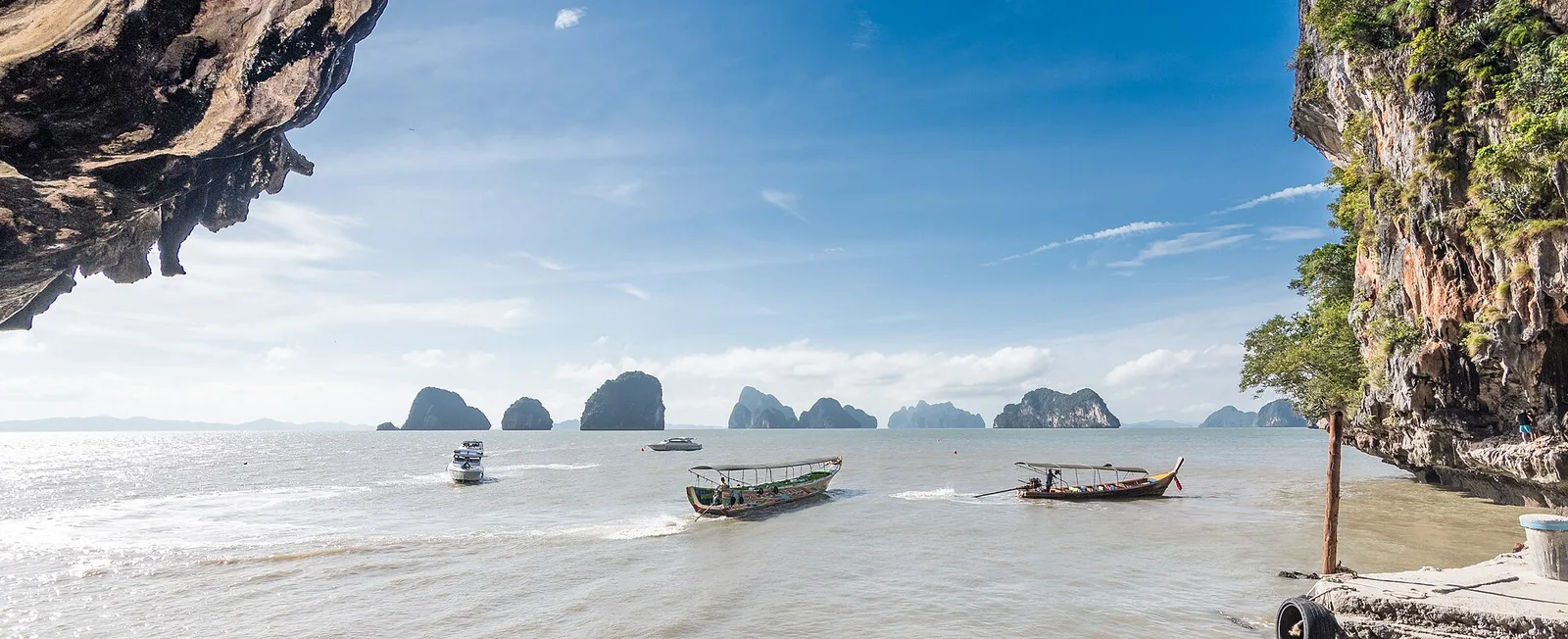
The traditional longtail is often chosen for its open view and local character. It also brings engine noise, possible spray and more basic facilities than a larger cruise vessel. Some boats have covered seating, but the amount of shade and the design of the seats vary. Ask about the actual boat rather than assuming every longtail is identical.
A pier-only private charter and a hotel-to-hotel package are different purchases. The first may work well if you already have a driver or are staying near the departure pier. The second can be better value when it combines the car, boat, guide and a clear return arrangement. Private refers to the booked group arrangement, not unlimited route choice.
The canoe is another part of the comparison
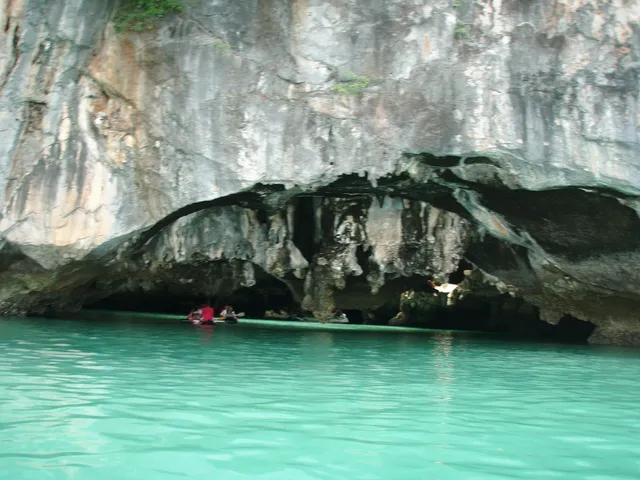
Big boats, speedboats and longtails can all appear in products that include canoeing. Separate the transfer vessel from the canoe experience. A speedboat photograph does not tell you whether your time in a hong will be guided, self-paddled, brief or repeated at several locations.
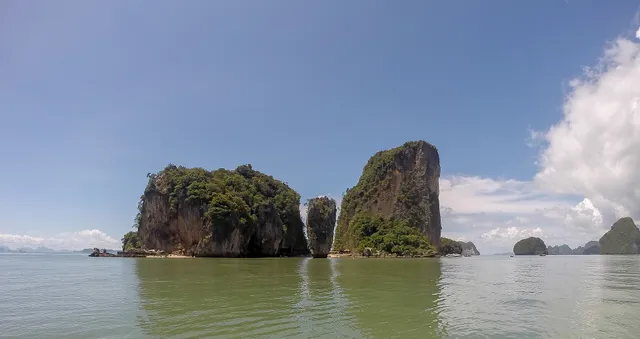
For two otherwise similar trips, ask how many canoe sessions are planned and where they occur. A cave-led afternoon and evening can be the better purchase for someone who wants nature at water level, while one shorter session may be enough for a traveller primarily interested in James Bond Island and Koh Panyi.
Use a boarding checklist instead of a vague comfort score
Describe your group’s needs in concrete terms. A person may walk well but find a low canoe seat difficult, or handle steps but need reliable shade. Those are solvable questions only when the operator knows them.
- Boarding: pier, floating pontoon, steps or a beach landing?
- Small craft: must everyone transfer to a canoe or landing boat?
- Seating: upright seats, cushions or shared lounging space?
- Facilities: toilets, handwashing and somewhere to change wet clothes?
- Children: life-jacket sizes and the canoe seating arrangement?
- Opting out: where does a guest wait if they skip swimming or a cave?
Compare cost per group and useful time
Build a simple total: boat or tour price plus required park admission, return road transport, canoe supplements and meals you would otherwise buy. Divide a private quote by your actual group size, not the maximum number advertised. A boat priced for up to a certain number is not necessarily economical for two people.
Then compare useful time. Two trips can both be sold as full days while one spends longer collecting hotels and the other spends longer on the water. A central meeting point can sometimes reduce the collection circuit, but only if getting there is straightforward and the selected ticket permits it. Do not turn a small saving into an expensive predawn taxi without doing the arithmetic.
Choose the format that survives a change of plan
Weather, water conditions and park instructions can alter any format. No boat label guarantees a smooth crossing, and an early departure is not a safety forecast. Choose a programme with several parts you value so that a changed stop does not remove the only reason you booked.
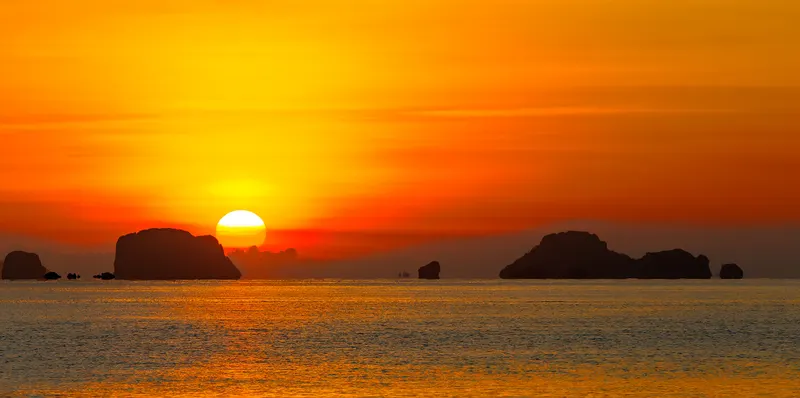
For first-time visitors, a daytime big boat or speedboat is a useful starting comparison. For an independent group with a mainland base, price a private longtail. For an anniversary or friends’ outing, compare the atmosphere of a sunset cruise. For serious interest in caves, choose the canoe programme first and regard the support boat as the transport that makes it possible.
Questions worth asking
Is a catamaran always smoother than a speedboat?
Do not rely on the label alone. Vessel design, loading, route and sea conditions all affect motion. Ask about the specific boat and disclose relevant health concerns to the operator.
Does a big boat mean wheelchair access?
No. Stairs, narrow facilities and transfers into smaller craft may still be involved. Request specific boarding and facilities information before booking.
Can I stay aboard while others canoe?
Some programmes may allow this, but it is not universal. Confirm where non-participants wait, whether staff remain with them and whether a landing requires a smaller craft.
Is a private longtail cheaper for a family?
It can be, but compare the complete group total. Road transfers, park fees, meals and canoeing can be separate, and the boat must have an appropriate capacity and equipment for everyone.
Sources & editorial notes
Our guides use official tourism, provider and accommodation pages. Routes, opening arrangements and terms can change; confirm your date with the relevant provider.